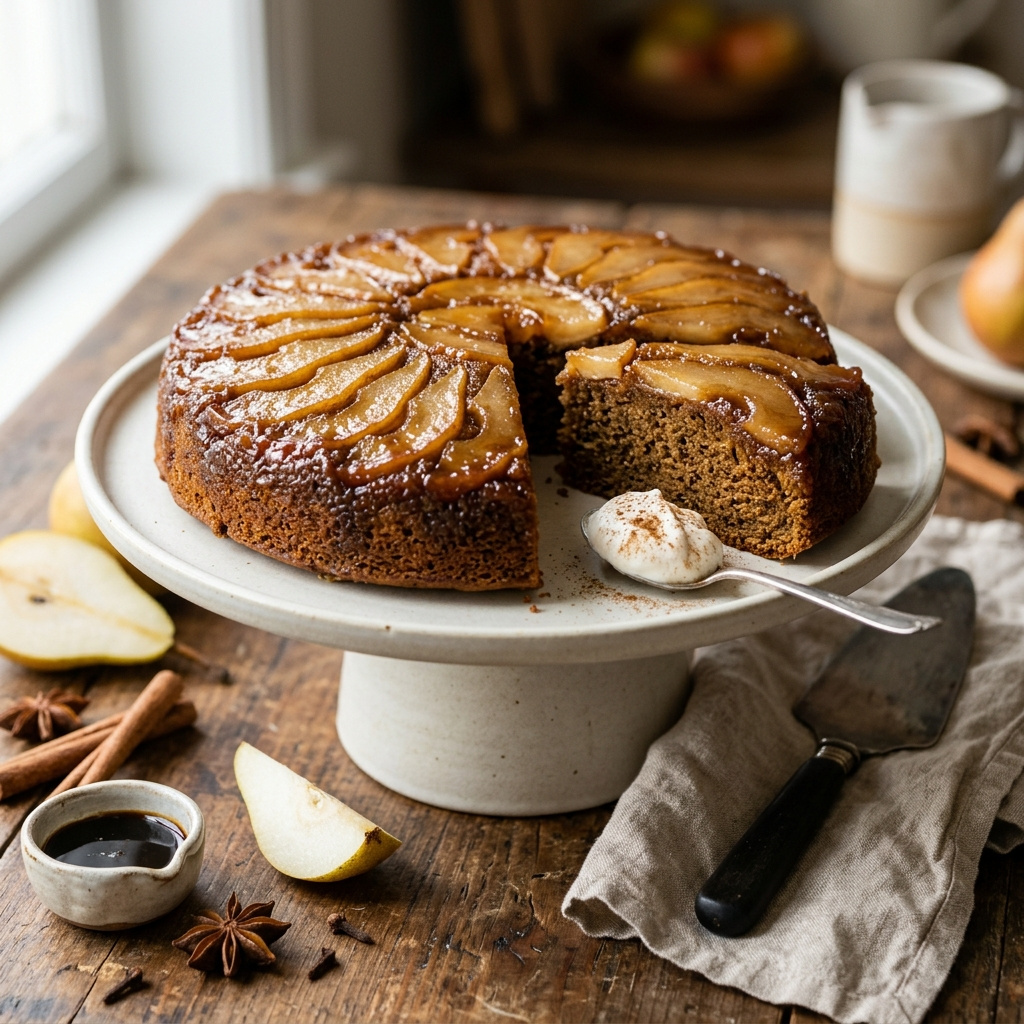
Pear Gingerbread Upside-Down Cake combines warm holiday spices, tender fruit, and a soft molasses-rich cake in one beautiful dessert. As it bakes, the pears soften into a glossy topping while the gingerbread layer stays moist and deeply flavored.
This cake is a lovely choice for a weekend bake, a dinner party dessert, or a seasonal treat to serve with coffee or tea. Turning the cake out after baking reveals the patterned pear topping, giving it an elegant look without requiring any complicated decorating.
The recipe uses ripe but firm pears, a simple brown sugar butter topping, and a classic gingerbread-style batter scented with ginger, cinnamon, and cloves. Serve it slightly warm or fully cooled, plain or with a spoonful of whipped cream, for a dessert that feels both rustic and special.
Recipe Overview
- Prep time: 25 minutes
- Cook time: 45 minutes
- Total time: 80 minutes
- Servings: 8 servings
- Difficulty: Easy
Why You’ll Love It
- The upside-down pear topping looks impressive with very little extra effort.
- Molasses, ginger, cinnamon, and cloves give the cake a rich classic gingerbread flavor.
- The texture is soft and moist, with tender baked pears on top of every slice.
- It works well for dessert, brunch, or a festive afternoon snack.
- The ingredients are straightforward and easy to find in most grocery stores.
Nutritional Benefits and Adaptable Variations
- Use Bosc or Anjou pears because they hold their shape well during baking.
- Add 30 grams chopped crystallized ginger to the batter for extra spice and texture.
- Serve each slice with whipped cream or vanilla ice cream for a simple finishing touch.
- Swap the cloves for allspice if you prefer a slightly different warm spice profile.
- A handful of 40 grams chopped toasted pecans can be scattered over the pear layer before adding the batter for added crunch.
Ingredients
- 30 grams unsalted butter, melted, for the pan
- 100 grams light brown sugar for the topping
- 3 medium pears, peeled, cored, and sliced into thin wedges
- 190 grams all-purpose flour
- 1 teaspoon baking soda
- 1 teaspoon ground ginger
- 1 teaspoon ground cinnamon
- 1/4 teaspoon ground cloves
- 1/4 teaspoon fine salt
- 115 grams unsalted butter, softened
- 100 grams light brown sugar for the batter
- 2 large eggs
- 120 milliliters unsulphured molasses
- 120 milliliters buttermilk
- 1 teaspoon vanilla extract
Step-by-Step Instructions
- Preheat the oven to 175 degrees Celsius. Grease a 23-centimeter round cake pan with some of the melted butter, line the bottom with parchment paper, then brush the parchment with the remaining melted butter.
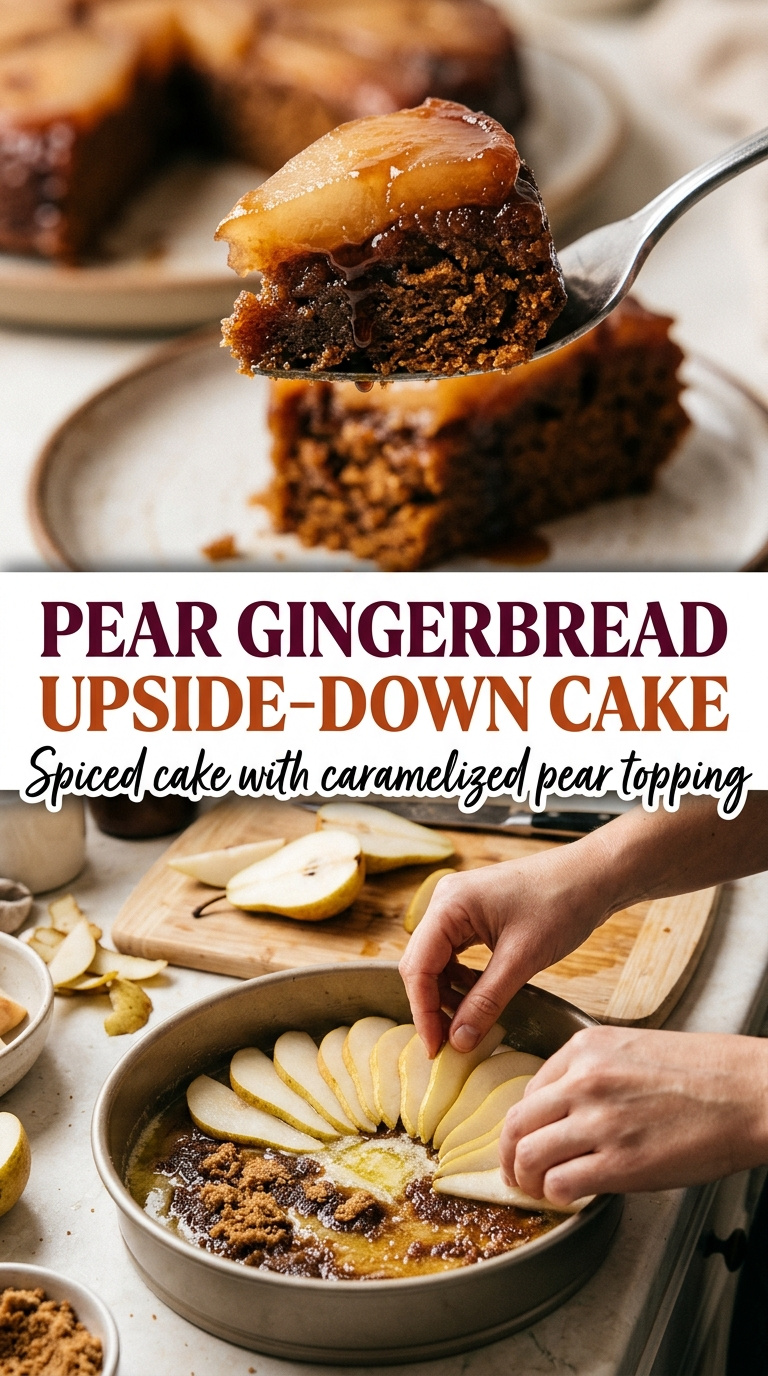
- Sprinkle 100 grams light brown sugar evenly over the bottom of the prepared pan. Arrange the pear wedges in overlapping circles over the sugar, covering the base in an even layer.
- In a medium bowl, whisk together the flour, baking soda, ground ginger, ground cinnamon, ground cloves, and salt until evenly combined.
- In a large bowl, beat the softened butter with 100 grams light brown sugar until light and creamy, about 2 to 3 minutes. Add the eggs one at a time, beating well after each addition.
- Mix in the molasses, buttermilk, and vanilla extract. The mixture may look slightly curdled at this stage, which is normal.
- Add the dry ingredients to the wet ingredients and fold gently just until no dry streaks remain. Do not overmix the batter.
- Spoon the batter carefully over the arranged pears and spread it into an even layer without disturbing the fruit pattern underneath.
- Bake for 40 to 45 minutes, until the cake is deeply golden and a skewer inserted into the center comes out clean.
- Cool the cake in the pan for 10 minutes. Run a thin knife around the edge, place a serving plate over the pan, and carefully invert the cake onto the plate. Lift off the pan and peel away the parchment.
- Let the cake rest for another 10 minutes before slicing so the topping can settle slightly. Serve warm or at room temperature.
Tips, Serving Suggestions & Substitutions
- Choose pears that are ripe but still firm so they soften without falling apart.
- Slice the pears evenly to help them cook at the same rate and create a neat top pattern.
- Do not overmix the batter or the cake can become dense.
- If the top browns too quickly, loosely tent the cake with foil for the last 10 minutes of baking.
- Invert the cake while it is still warm so the pear topping releases cleanly from the pan.
Nutrition Information
| Per Serving | Approximate Amount |
|---|---|
| Calories | 383 kcal |
| Carbohydrates | 58 g |
| Protein | 4 g |
| Fat | 16 g |
| Saturated Fat | 10 g |
| Cholesterol | 84 mg |
| Sodium | 233 mg |
| Fiber | 2 g |
| Sugar | 35 g |
These nutrition values are approximate estimates per serving based on 8 servings and can vary depending on the exact pears, molasses, and dairy products used.
Storage & Make-Ahead Tips
Store leftover cake covered in the refrigerator for up to 3 days.
For the best texture, let chilled slices come to room temperature or warm them briefly before serving.
Wrap individual slices well if freezing, and thaw in the refrigerator before reheating gently.
FAQ
1. What type of pears work best for this cake?
Bosc and Anjou pears are excellent choices because they hold their shape well while baking and become tender without turning mushy.
2. Can I make this cake ahead of time?
Yes, you can bake it a day ahead. Cool it completely, refrigerate it covered, and bring it closer to room temperature or warm it slightly before serving.
3. Do I need buttermilk for the batter?
Buttermilk gives the cake a tender crumb and balanced flavor. If needed, you can make a substitute by stirring 1 tablespoon lemon juice or vinegar into 120 milliliters milk and letting it stand for 5 minutes.
4. Why should I invert the cake while it is still warm?
Turning the cake out while warm helps the brown sugar pear topping release more easily from the pan before it has a chance to firm up and stick.
5. Can I use a different pan size?
A 23-centimeter round cake pan is ideal for the stated baking time and thickness. Using a different size may change the baking time and the way the pear topping fits in the pan.
Final Thoughts
Pear Gingerbread Upside-Down Cake is a comforting dessert with bold spice, soft fruit, and a beautiful presentation that comes together from simple pantry ingredients. It is especially nice when you want something seasonal that feels homemade and inviting.
Whether you serve it after dinner or with an afternoon cup of tea, this cake delivers warm flavor and a tender crumb in every bite. Keep it plain for a rustic finish or add a little whipped cream for an easy extra touch.
Pear Gingerbread Upside-Down Cake
Ingredients
- 30 grams unsalted butter melted, for the pan
- 100 grams light brown sugar for the topping
- 3 medium pears peeled, cored, and sliced into thin wedges
- 190 grams all-purpose flour
- 1 teaspoon baking soda
- 1 teaspoon ground ginger
- 1 teaspoon ground cinnamon
- 1/4 teaspoon ground cloves
- 1/4 teaspoon fine salt
- 115 grams unsalted butter softened
- 100 grams light brown sugar for the batter
- 2 large eggs
- 120 milliliters unsulphured molasses
- 120 milliliters buttermilk
- 1 teaspoon vanilla extract
Instructions
- Preheat the oven to 175 degrees Celsius. Grease a 23-centimeter round cake pan with some of the melted butter, line the bottom with parchment paper, then brush the parchment with the remaining melted butter.
- Sprinkle 100 grams light brown sugar evenly over the bottom of the prepared pan. Arrange the pear wedges in overlapping circles over the sugar, covering the base in an even layer.
- In a medium bowl, whisk together the flour, baking soda, ground ginger, ground cinnamon, ground cloves, and salt until evenly combined.
- In a large bowl, beat the softened butter with 100 grams light brown sugar until light and creamy, about 2 to 3 minutes. Add the eggs one at a time, beating well after each addition.
- Mix in the molasses, buttermilk, and vanilla extract. The mixture may look slightly curdled at this stage, which is normal.
- Add the dry ingredients to the wet ingredients and fold gently just until no dry streaks remain. Do not overmix the batter.
- Spoon the batter carefully over the arranged pears and spread it into an even layer without disturbing the fruit pattern underneath.
- Bake for 40 to 45 minutes, until the cake is deeply golden and a skewer inserted into the center comes out clean.
- Cool the cake in the pan for 10 minutes. Run a thin knife around the edge, place a serving plate over the pan, and carefully invert the cake onto the plate. Lift off the pan and peel away the parchment.
- Let the cake rest for another 10 minutes before slicing so the topping can settle slightly. Serve warm or at room temperature.