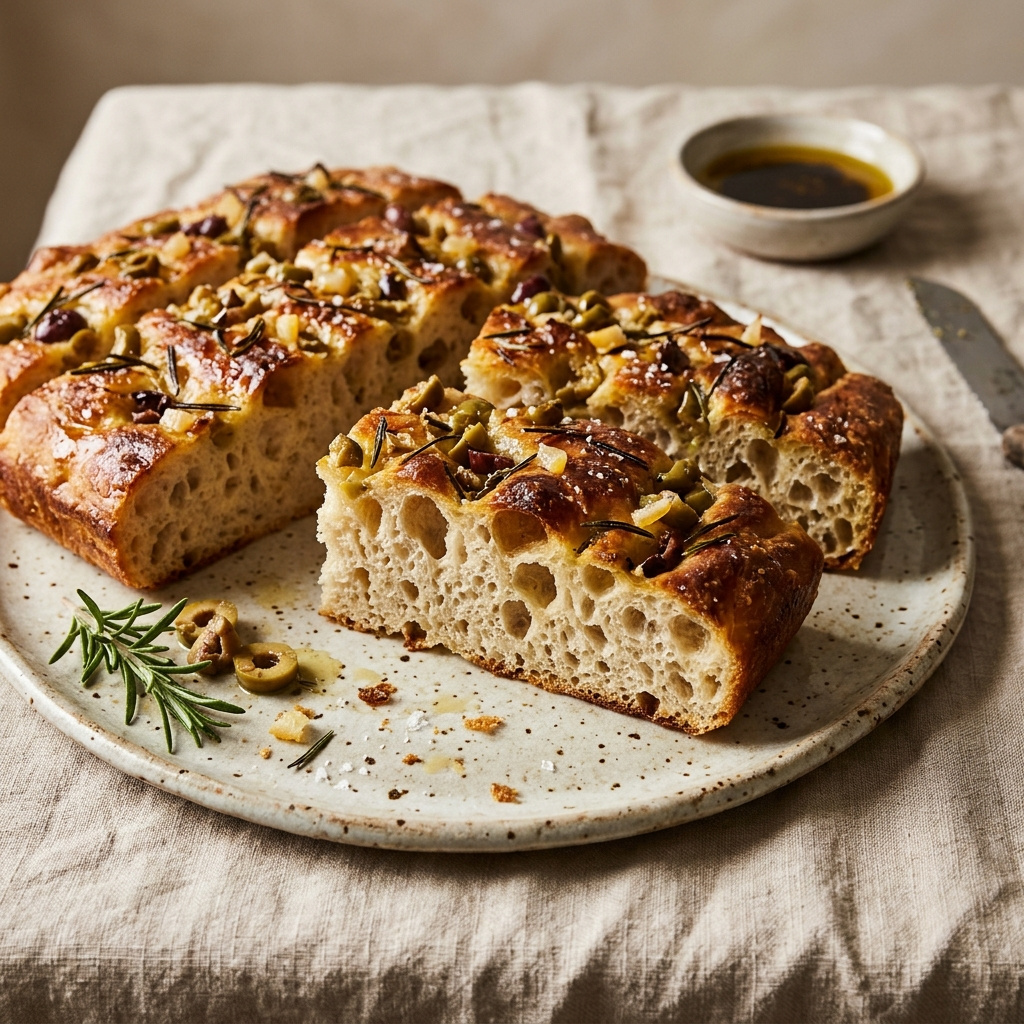
Olive and Preserved Lemon Sourdough Focaccia is a deeply flavored bread with a crisp golden crust, a tender open crumb, and bright savory notes in every bite. The sourdough base brings gentle tang and complexity, while preserved lemon adds concentrated citrus depth that pairs beautifully with briny olives and fruity olive oil.
This focaccia is a wonderful choice when you want a bread that feels special but still fits into a practical home baking schedule. Most of the time is hands-off, and a few simple folds help build structure so the dough bakes up airy and light with the classic dimpled surface focaccia is known for.
Serve it warm as part of a mezze spread, alongside soups and salads, or sliced for sandwiches. The combination of rosemary, olives, and preserved lemon gives it a Mediterranean feel, and the finish of flaky sea salt makes each piece especially satisfying.
Recipe Overview
- Prep time: 25 minutes
- Cook time: 30 minutes
- Total time: 235 minutes
- Servings: 12 servings
- Difficulty: Intermediate
Why You’ll Love It
- The sourdough starter adds rich flavor and a pleasantly chewy texture.
- Preserved lemon brings bright, savory citrus notes without making the bread taste sweet.
- Olives and rosemary create a classic combination that works for snacks, sides, or sandwiches.
- The dough is mostly hands-off, with simple folds instead of intensive kneading.
- It bakes into a crisp-edged focaccia with a soft, airy center.
Nutritional Benefits and Adaptable Variations
- Use a mix of green and black olives for more color and a slightly more complex briny flavor.
- Swap rosemary for thyme if you want a softer herbal note.
- Add 30 grams of thinly sliced red onion on top before baking for extra sweetness and color.
- Finish the baked focaccia with 15 ml extra virgin olive oil for a richer glossy surface.
- Serve with hummus, whipped feta, or a simple tomato salad for an easy meal spread.
Ingredients
- 150 grams active sourdough starter
- 400 grams bread flour
- 320 ml warm water
- 10 grams fine sea salt
- 45 ml extra virgin olive oil, plus 30 ml for the pan and topping
- 80 grams pitted olives, roughly chopped
- 25 grams preserved lemon peel, rinsed and finely chopped
- 5 grams fresh rosemary, finely chopped
- 3 grams flaky sea salt for topping
Step-by-Step Instructions
- In a large mixing bowl, combine the active sourdough starter, warm water, and bread flour until no dry flour remains. Cover the bowl and let the dough rest for 20 minutes to hydrate the flour.
- Sprinkle the fine sea salt over the dough and add 30 ml of the extra virgin olive oil. Squeeze and fold the dough until the salt and oil are fully incorporated and the dough looks smoother.
- Add the chopped olives, preserved lemon peel, and chopped rosemary. Gently fold the dough several times to distribute the mix-ins as evenly as possible without tearing the dough excessively.
- Cover the bowl and let the dough rise at room temperature for 2 hours, giving it 3 sets of stretch-and-folds during that time at 30-minute intervals. With each fold, lift one side of the dough and fold it over itself, rotating the bowl until all sides have been folded.
- Pour 15 ml of extra virgin olive oil into a 23 x 33 cm baking pan and spread it over the bottom and sides. Transfer the dough to the pan and turn it once so it is lightly coated in oil.
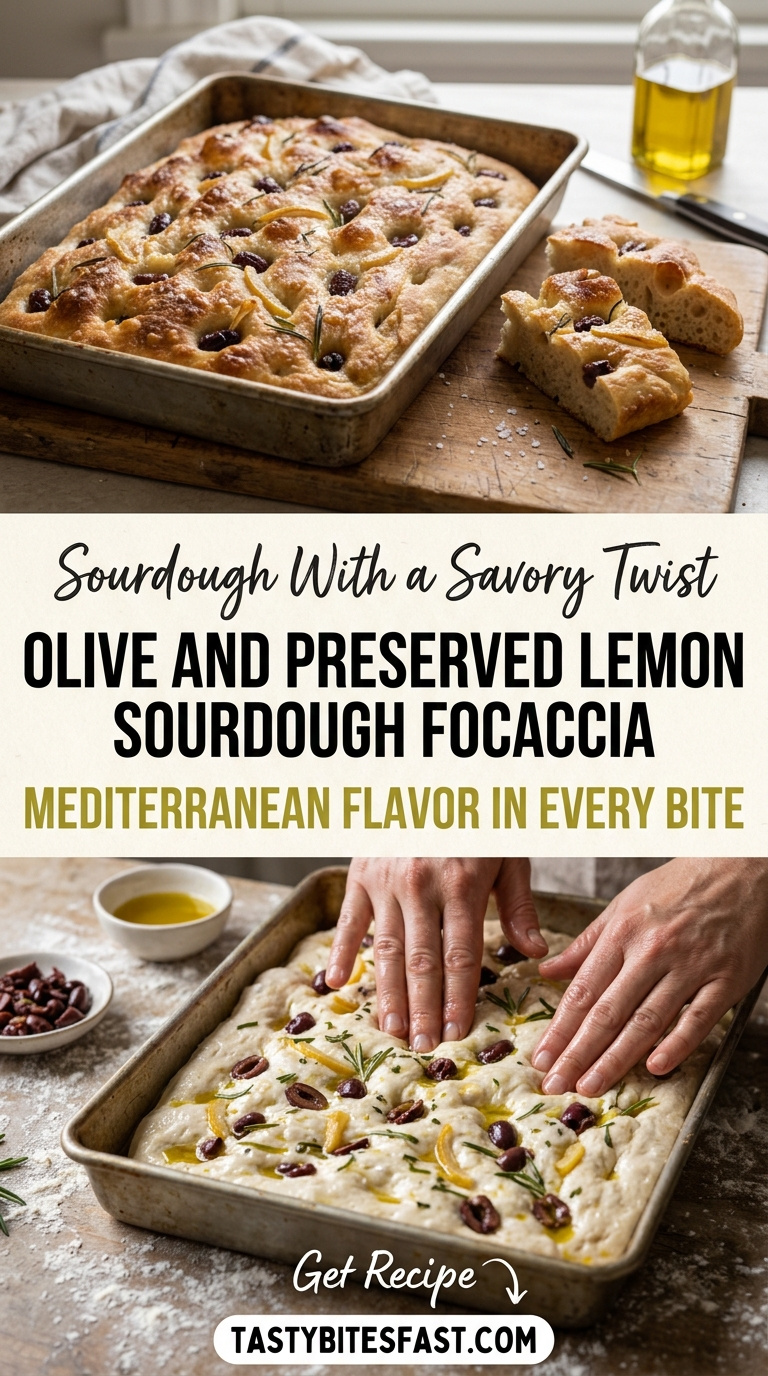
- Gently press the dough outward toward the corners of the pan. If it resists stretching, let it rest for 10 minutes and then press again. Cover and let it proof for 1 hour, or until noticeably puffy.
- Preheat the oven to 220°C during the final 20 minutes of proofing.
- Drizzle the remaining 15 ml extra virgin olive oil over the dough. Dimple the surface all over with oiled fingertips, pressing down firmly but not deflating the dough completely. Sprinkle the flaky sea salt evenly over the top.
- Bake for 25 to 30 minutes, until the focaccia is golden brown on top and crisp around the edges. If needed, rotate the pan once during baking for even color.
- Remove the focaccia from the pan and cool on a wire rack for at least 20 minutes before slicing. This rest helps the crumb set and keeps the interior from becoming gummy.
Tips, Serving Suggestions & Substitutions
- Rinse the preserved lemon peel briefly if it tastes very salty, then pat it dry before chopping.
- Use an active, bubbly starter that has recently peaked for the best rise and flavor.
- Oil your hands before handling the dough to prevent sticking without adding extra flour.
- Do not overload the dough with olives, or the structure can weaken and become dense.
- Cooling the focaccia on a rack helps preserve the crisp bottom crust.
Nutrition Information
| Per Serving | Approximate Amount |
|---|---|
| Calories | 187 kcal |
| Carbohydrates | 24 g |
| Protein | 5 g |
| Fat | 8 g |
| Saturated Fat | 1 g |
| Cholesterol | 0 mg |
| Sodium | 412 mg |
| Fiber | 1 g |
| Sugar | 1 g |
Nutrition is an approximate estimate per serving based on 12 servings. Values can vary depending on the saltiness of the olives and preserved lemon, the exact flour used, and the amount of olive oil retained after baking.
Storage & Make-Ahead Tips
Store cooled focaccia in an airtight container at room temperature for up to 2 days.
For longer storage, refrigerate the bread in a sealed container for up to 4 days and reheat before serving for the best texture.
Freeze sliced focaccia for up to 2 months in a freezer-safe bag, then thaw and warm in the oven to refresh the crust.
FAQ
1. Can I use all-purpose flour instead of bread flour?
Yes, but the focaccia may be slightly less chewy and may not hold quite as much structure. It will still bake well if the dough is handled gently during folding and proofing.
2. Do I need to use preserved lemon peel only, or can I use the pulp too?
It is best to use mostly the peel for this recipe because it has the most balanced flavor and a pleasant texture in the bread. The pulp can be very intense and salty, so use only a small amount if you include it.
3. What kind of olives work best in this focaccia?
Firm, flavorful olives such as Kalamata, Castelvetrano, or mixed Mediterranean olives work very well. Just make sure they are pitted and not overly wet before adding them to the dough.
4. Can I make the dough ahead of time?
Yes. After the initial mixing and one or two folds, you can refrigerate the dough overnight in a covered bowl. Let it come closer to room temperature, transfer it to the pan, and allow extra proofing time before baking.
5. Why is my focaccia dense instead of airy?
A dense focaccia can happen if the starter was not active enough, the dough was underproofed, or too many mix-ins weighed it down. Make sure the dough becomes puffy before baking and avoid pressing out too much air when dimpling.
Final Thoughts
This focaccia offers a great balance of tangy sourdough character, rich olive oil, and bold savory accents from olives and preserved lemon. It feels rustic and elegant at the same time, making it suitable for both casual meals and more festive spreads.
Once you try this combination, it is easy to see why it works so well. The bright citrusy saltiness and soft airy crumb make each slice memorable, whether you serve it on its own or as part of a larger table.
Olive and Preserved Lemon Sourdough Focaccia
Ingredients
- 150 grams active sourdough starter
- 400 grams bread flour
- 320 ml warm water
- 10 grams fine sea salt
- 45 ml extra virgin olive oil plus 30 ml for the pan and topping
- 80 grams pitted olives roughly chopped
- 25 grams preserved lemon peel rinsed and finely chopped
- 5 grams fresh rosemary finely chopped
- 3 grams flaky sea salt for topping
Instructions
- In a large mixing bowl, combine the active sourdough starter, warm water, and bread flour until no dry flour remains. Cover the bowl and let the dough rest for 20 minutes to hydrate the flour.
- Sprinkle the fine sea salt over the dough and add 30 ml of the extra virgin olive oil. Squeeze and fold the dough until the salt and oil are fully incorporated and the dough looks smoother.
- Add the chopped olives, preserved lemon peel, and chopped rosemary. Gently fold the dough several times to distribute the mix-ins as evenly as possible without tearing the dough excessively.
- Cover the bowl and let the dough rise at room temperature for 2 hours, giving it 3 sets of stretch-and-folds during that time at 30-minute intervals. With each fold, lift one side of the dough and fold it over itself, rotating the bowl until all sides have been folded.
- Pour 15 ml of extra virgin olive oil into a 23 x 33 cm baking pan and spread it over the bottom and sides. Transfer the dough to the pan and turn it once so it is lightly coated in oil.
- Gently press the dough outward toward the corners of the pan. If it resists stretching, let it rest for 10 minutes and then press again. Cover and let it proof for 1 hour, or until noticeably puffy.
- Preheat the oven to 220°C during the final 20 minutes of proofing.
- Drizzle the remaining 15 ml extra virgin olive oil over the dough. Dimple the surface all over with oiled fingertips, pressing down firmly but not deflating the dough completely. Sprinkle the flaky sea salt evenly over the top.
- Bake for 25 to 30 minutes, until the focaccia is golden brown on top and crisp around the edges. If needed, rotate the pan once during baking for even color.
- Remove the focaccia from the pan and cool on a wire rack for at least 20 minutes before slicing. This rest helps the crumb set and keeps the interior from becoming gummy.