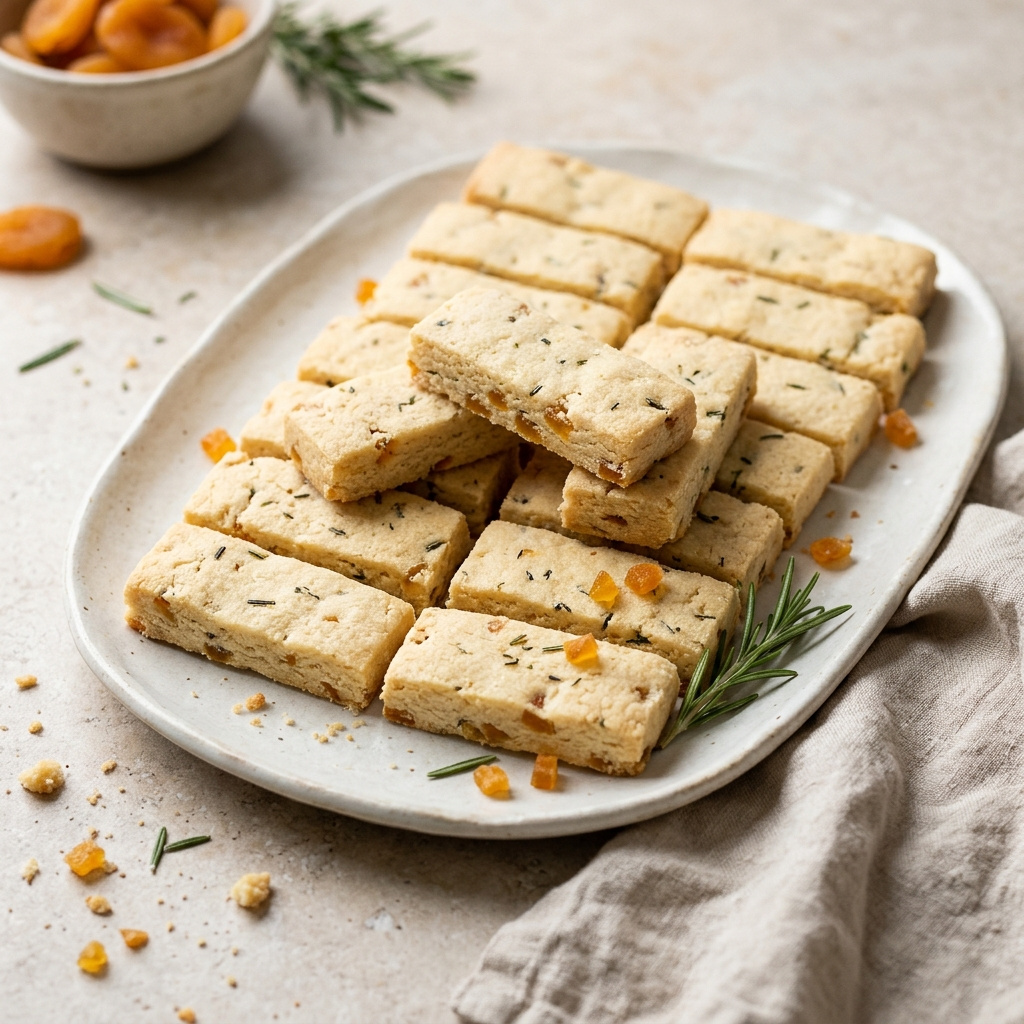
Apricot Rosemary Shortbread Fingers are a crisp, buttery cookie with a delicate herbal note and pockets of sweet dried apricot in every bite. The combination feels a little elegant and a little rustic, making these bars just as fitting for a holiday tray as they are for an afternoon coffee break.
This recipe keeps the method straightforward: a simple shortbread dough is mixed, pressed into a pan, chilled briefly, and baked until pale golden at the edges. Finely chopped dried apricots bring gentle fruitiness, while fresh rosemary adds a subtle savory fragrance that balances the richness of the butter.
Once baked, the slab is cut into neat fingers for that classic shortbread look. The result is tender yet sturdy, with clean edges, a sandy crumb, and a flavor that becomes even better after the cookies cool completely.
Recipe Overview
- Prep time: 20 minutes
- Cook time: 30 minutes
- Total time: 60 minutes
- Servings: 18 cookies
- Difficulty: Easy
Why You’ll Love It
- The dough uses basic pantry ingredients plus dried apricots and fresh rosemary for a distinctive flavor.
- These shortbread fingers slice neatly and look polished without complicated decorating.
- The texture is buttery and tender with lightly crisp edges and chewy bits of fruit.
- The recipe is easy to make ahead because the flavor and texture hold up well after cooling.
- It works well for tea, coffee, dessert platters, and edible gift boxes.
Nutritional Benefits and Adaptable Variations
- For a brighter citrus note, add 1 teaspoon finely grated orange zest to the dough with the flour.
- If you prefer a stronger fruit flavor, increase the chopped dried apricots to 140 grams and press the dough firmly so it still slices cleanly.
- A pinch of flaky sea salt on top before baking adds a pleasant contrast to the sweet buttery base.
- You can use finely chopped dried peaches instead of apricots for a similar texture and a slightly different flavor.
- For a more pronounced herbal note, sprinkle 1 teaspoon extra finely chopped rosemary over the dough after docking it.
Ingredients
- 225 grams unsalted butter, softened
- 100 grams granulated sugar
- 1 teaspoon vanilla extract
- 260 grams all-purpose flour
- 40 grams cornstarch
- 1/2 teaspoon fine salt
- 90 grams dried apricots, finely chopped
- 2 teaspoons fresh rosemary, very finely chopped
- 1 tablespoon granulated sugar for topping
Step-by-Step Instructions

- Preheat the oven to 160°C and line an 20-centimeter square baking pan with parchment paper, leaving enough overhang to lift the shortbread out after baking.
- In a large mixing bowl, beat the softened butter and 100 grams granulated sugar until smooth, creamy, and slightly lighter in color, about 2 to 3 minutes.
- Add the vanilla extract and mix until fully combined.
- In a separate bowl, whisk together the all-purpose flour, cornstarch, and fine salt.
- Add the dry ingredients to the butter mixture and mix on low speed just until a soft dough starts to form. Fold in the finely chopped dried apricots and finely chopped rosemary, making sure they are evenly distributed without overworking the dough.
- Transfer the dough to the prepared pan and press it into an even layer, smoothing the top with the back of a spoon or an offset spatula. Chill the pan for 10 minutes so the dough firms up slightly.
- Remove the pan from the refrigerator and use a fork to dock the surface all over. Sprinkle the remaining 1 tablespoon granulated sugar evenly across the top.
- Bake for 28 to 30 minutes, until the surface looks set and the edges are just beginning to turn light golden. The center should remain fairly pale.
- Let the shortbread cool in the pan for 10 minutes, then use the parchment to lift it onto a cutting board. While still warm, cut into 18 fingers. Let the cookies cool completely before serving so the texture sets properly.
Tips, Serving Suggestions & Substitutions
- Chop the apricots very finely so the dough presses evenly and the finished fingers slice without crumbling.
- Use fresh rosemary sparingly and mince it well to keep the flavor balanced and the texture delicate.
- Do not overmix once the flour is added, or the shortbread can become less tender.
- Cut the slab while it is still warm for the cleanest edges, then allow the fingers to finish cooling before moving them.
- If the dough feels sticky while pressing it into the pan, lightly flour your fingertips or place a sheet of parchment on top and press through it.
Nutrition Information
| Per Serving | Approximate Amount |
|---|---|
| Calories | 164 kcal |
| Carbohydrates | 18 g |
| Protein | 1 g |
| Fat | 10 g |
| Saturated Fat | 6 g |
| Cholesterol | 27 mg |
| Sodium | 67 mg |
| Fiber | 1 g |
| Sugar | 7 g |
Nutrition is an approximate estimate per serving based on 18 cookies and can vary with the specific butter and dried apricots used.
Storage & Make-Ahead Tips
Store the cooled shortbread fingers in an airtight container at room temperature for up to 5 days.
Place parchment between layers if stacking to help preserve the clean edges and prevent sticking.
For longer storage, freeze the baked cookies in an airtight container for up to 1 month and thaw at room temperature before serving.
FAQ
1. Can I use dried apricots that are very soft and sticky?
Yes. If the apricots are sticky, chill them for a few minutes first and chop them with a lightly oiled knife. This makes them easier to cut into small even pieces for the dough.
2. Can I use dried rosemary instead of fresh rosemary?
Yes, but use less because dried rosemary is stronger and has a firmer texture. Use 3/4 teaspoon dried rosemary and crush it finely before adding it to the dough.
3. Why do I need cornstarch in the recipe?
Cornstarch helps create the delicate, sandy texture that makes shortbread especially tender. It softens the flour mixture slightly and contributes to the classic crumbly bite.
4. Can I make the dough ahead of time?
Yes. Press the dough into the lined pan, cover it, and refrigerate it for up to 24 hours before baking. Let it sit at room temperature for a few minutes if it becomes very firm, then dock and bake as directed.
5. How do I keep the shortbread from overbrowning?
Bake at the stated moderate temperature and remove the pan when the edges are only lightly golden. Shortbread should stay fairly pale across the top, and it will continue to firm up as it cools.
Final Thoughts
These Apricot Rosemary Shortbread Fingers offer a simple way to make a classic butter cookie feel a little more special. The sweet fruit and fragrant rosemary create a balanced flavor that stands out without making the recipe complicated.
Serve them on a dessert tray, alongside tea or coffee, or wrap them up for gifting. Their neat shape and elegant flavor make them a reliable bake whenever you want something easy but memorable.
Apricot Rosemary Shortbread Fingers
Ingredients
- 225 grams unsalted butter softened
- 100 grams granulated sugar
- 1 teaspoon vanilla extract
- 260 grams all-purpose flour
- 40 grams cornstarch
- 1/2 teaspoon fine salt
- 90 grams dried apricots finely chopped
- 2 teaspoons fresh rosemary very finely chopped
- 1 tablespoon granulated sugar for topping
Instructions
- Preheat the oven to 160°C and line an 20-centimeter square baking pan with parchment paper, leaving enough overhang to lift the shortbread out after baking.
- In a large mixing bowl, beat the softened butter and 100 grams granulated sugar until smooth, creamy, and slightly lighter in color, about 2 to 3 minutes.
- Add the vanilla extract and mix until fully combined.
- In a separate bowl, whisk together the all-purpose flour, cornstarch, and fine salt.
- Add the dry ingredients to the butter mixture and mix on low speed just until a soft dough starts to form. Fold in the finely chopped dried apricots and finely chopped rosemary, making sure they are evenly distributed without overworking the dough.
- Transfer the dough to the prepared pan and press it into an even layer, smoothing the top with the back of a spoon or an offset spatula. Chill the pan for 10 minutes so the dough firms up slightly.
- Remove the pan from the refrigerator and use a fork to dock the surface all over. Sprinkle the remaining 1 tablespoon granulated sugar evenly across the top.
- Bake for 28 to 30 minutes, until the surface looks set and the edges are just beginning to turn light golden. The center should remain fairly pale.
- Let the shortbread cool in the pan for 10 minutes, then use the parchment to lift it onto a cutting board. While still warm, cut into 18 fingers. Let the cookies cool completely before serving so the texture sets properly.